 Emeka Okonkwo
Designing Helpdesk
Designing Helpdesk — an AI-powered shared mailbox that turns unstructured vendor emails into an intelligent Accounts Payable control layer across Xelix.
The Challenge
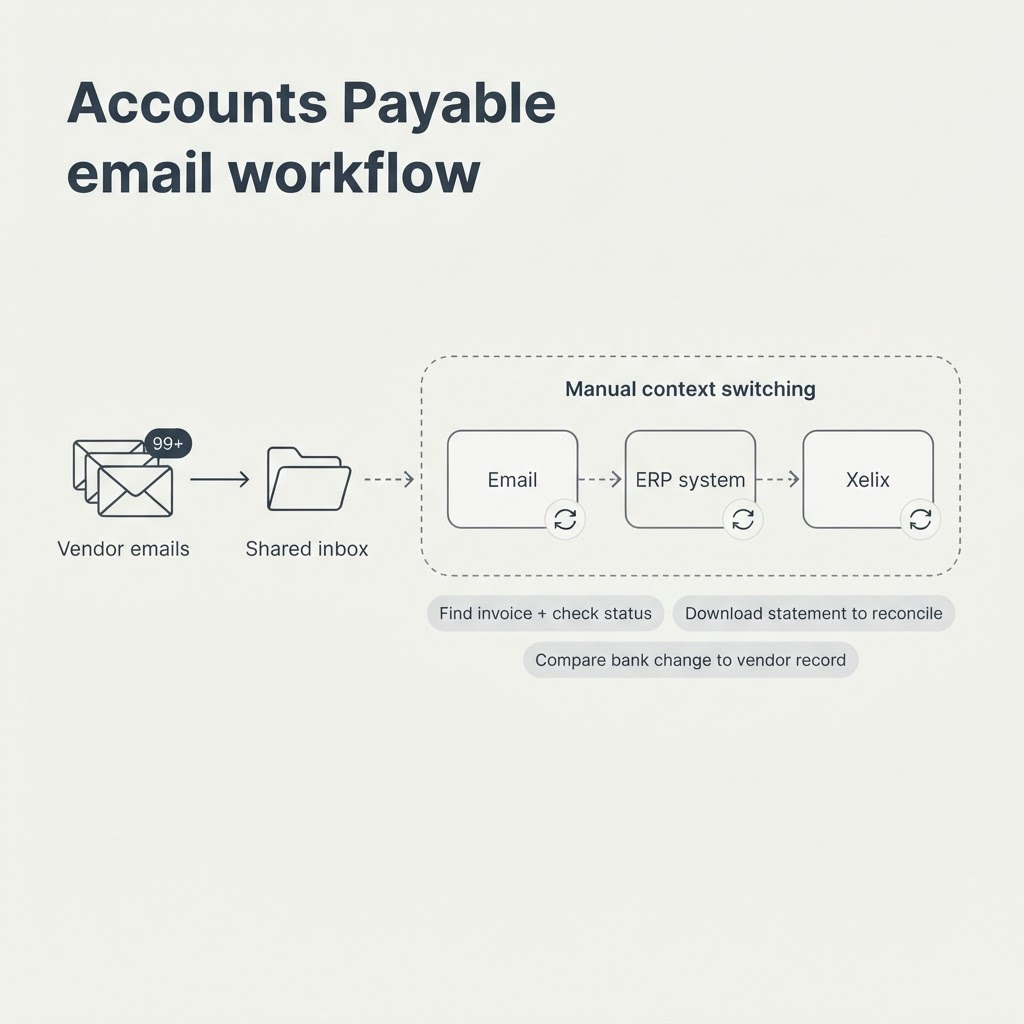
Accounts Payable teams received thousands of non-standardised vendor emails through shared inboxes. Reading, prioritising and assigning them was time-consuming, while generic ticketing tools were not designed around specialist finance workflows. Resolving one query often meant moving between email, an ERP and different areas of Xelix — locating an invoice, checking its status, downloading a statement, or manually comparing a bank-change request against the existing vendor record. The inbox captured communication, but not the operational work behind it, so teams lacked a reliable way to track ownership, protect service levels and understand where demand was coming from.
The Solution
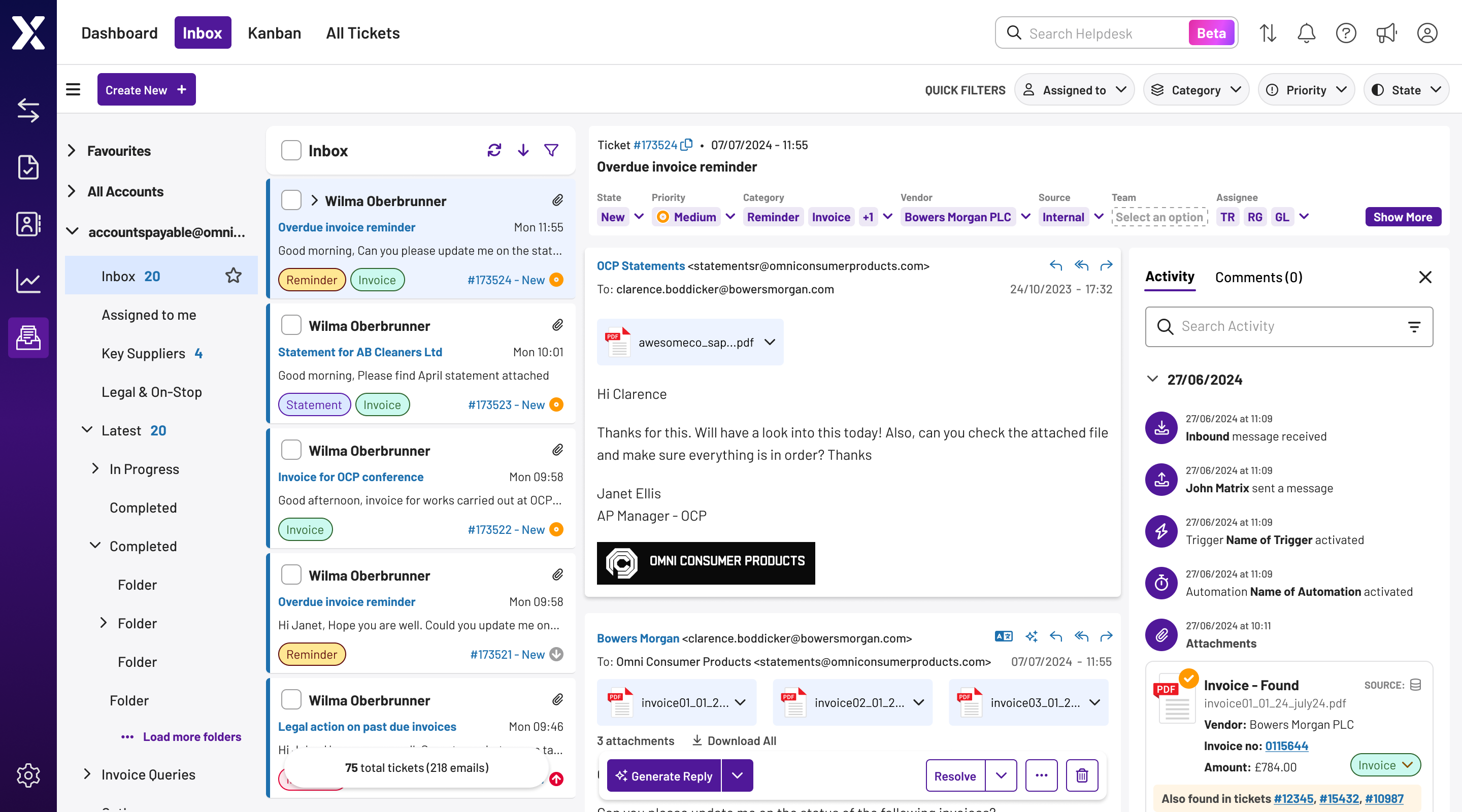
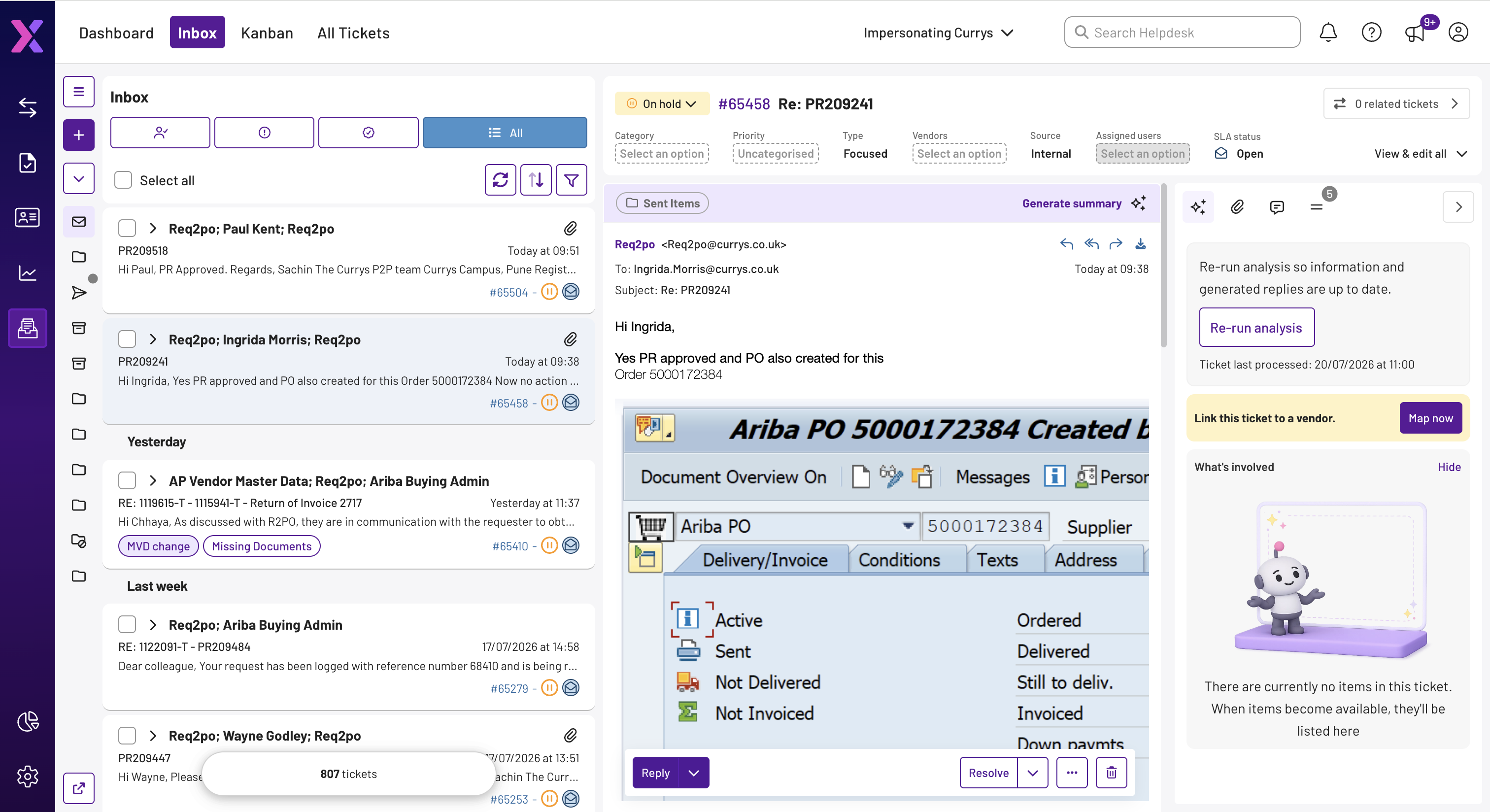
Helpdesk combined a shared mailbox and ticketing system with Xelix AI and the financial data held across the wider platform. Large Language Models read and categorised incoming emails and their attachments, and threads became trackable tickets that could be filtered, prioritised, assigned and moved through clear statuses without losing the original conversation.
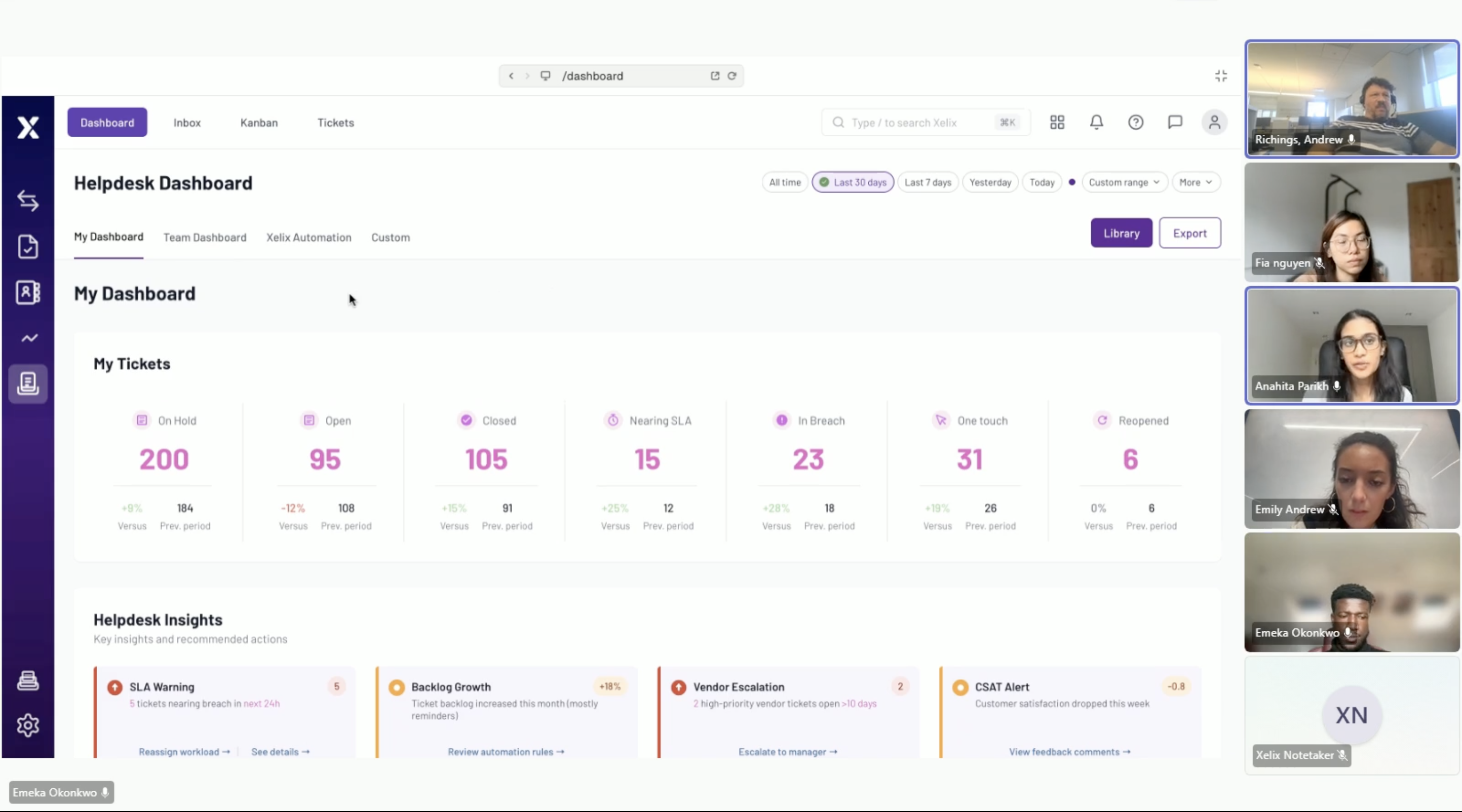
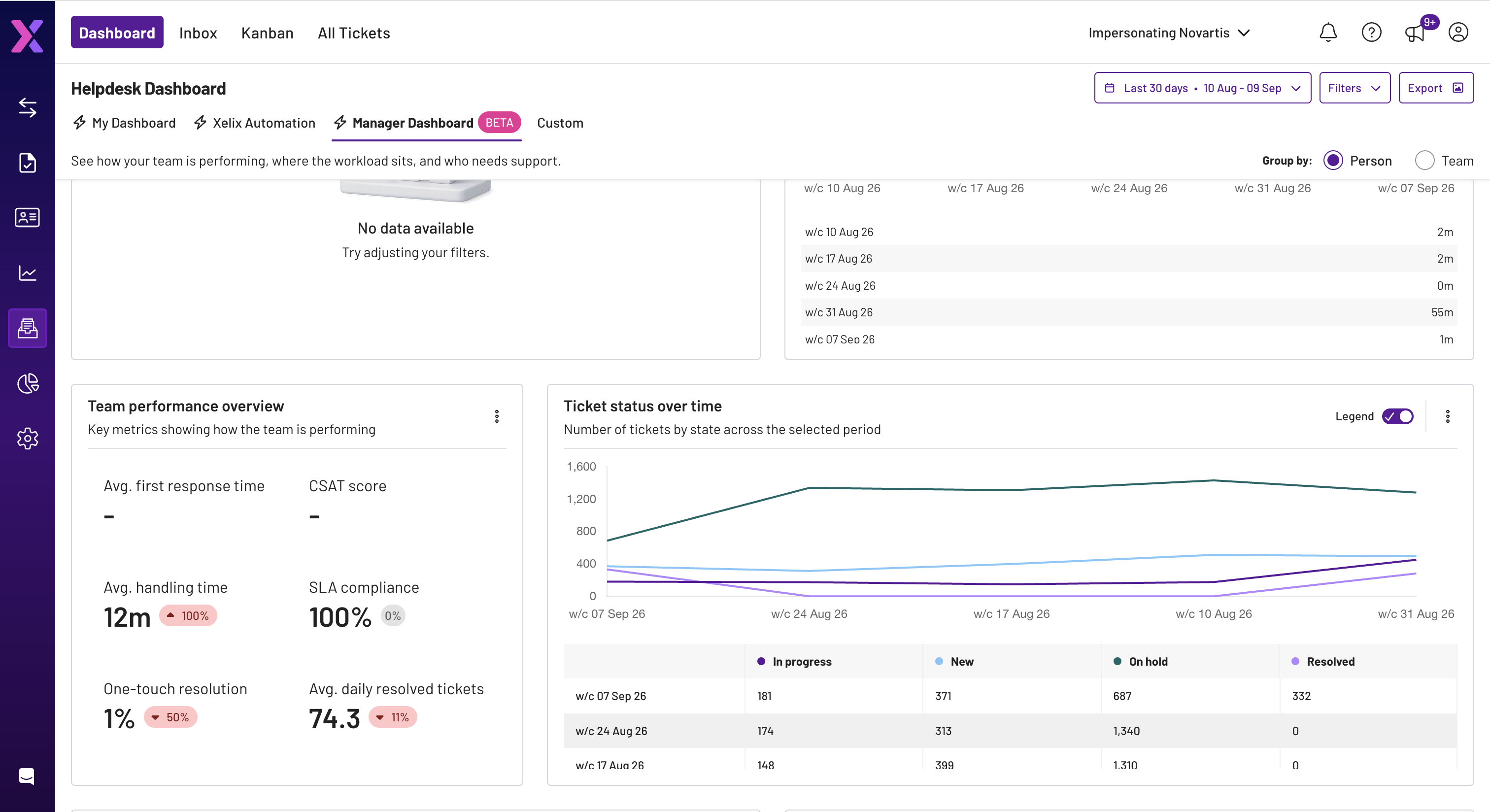
Statement attachments could move directly into reconciliation, payment reminders could be matched with ERP invoice data to generate a response, and bank and vendor-information changes could be compared against existing records to flag differences and potentially suspicious requests. Automation rules routed, assigned or answered tickets based on categories and team preferences, while managers monitored workload, SLA performance and the contribution made by Xelix automation.
The innovation was not simply generating replies. Helpdesk connected unstructured vendor communication with trusted operational data, turning an inbox into an intelligent Accounts Payable control layer.
My Approach
- 1
Interviewed AP clerks and managers, mapped their most frequent workflows and worked with internal teams to understand what data Xelix could already provide — the email was only the beginning of the task; users needed to know its type, urgency, owner, related financial record and the next action.
- 2
Surfaced a central product principle from research: automate the investigation before automating the decision. Clerks wanted automation to remove repetitive searching, but needed visibility and control when financial accuracy mattered.
- 3
Rather than adapting a generic ticketing system, worked with Product, Engineering and AI to design Helpdesk as a connected operational layer across Xelix, separating what could ship immediately from functionality that depended on reliable data extraction and matching.
- 4
Built the foundation first — connecting multiple mailboxes, converting email threads into tickets and introducing permissions, categories, statuses, assignments and internal collaboration — then connected specific ticket types to relevant Xelix and ERP workflows.
- 5
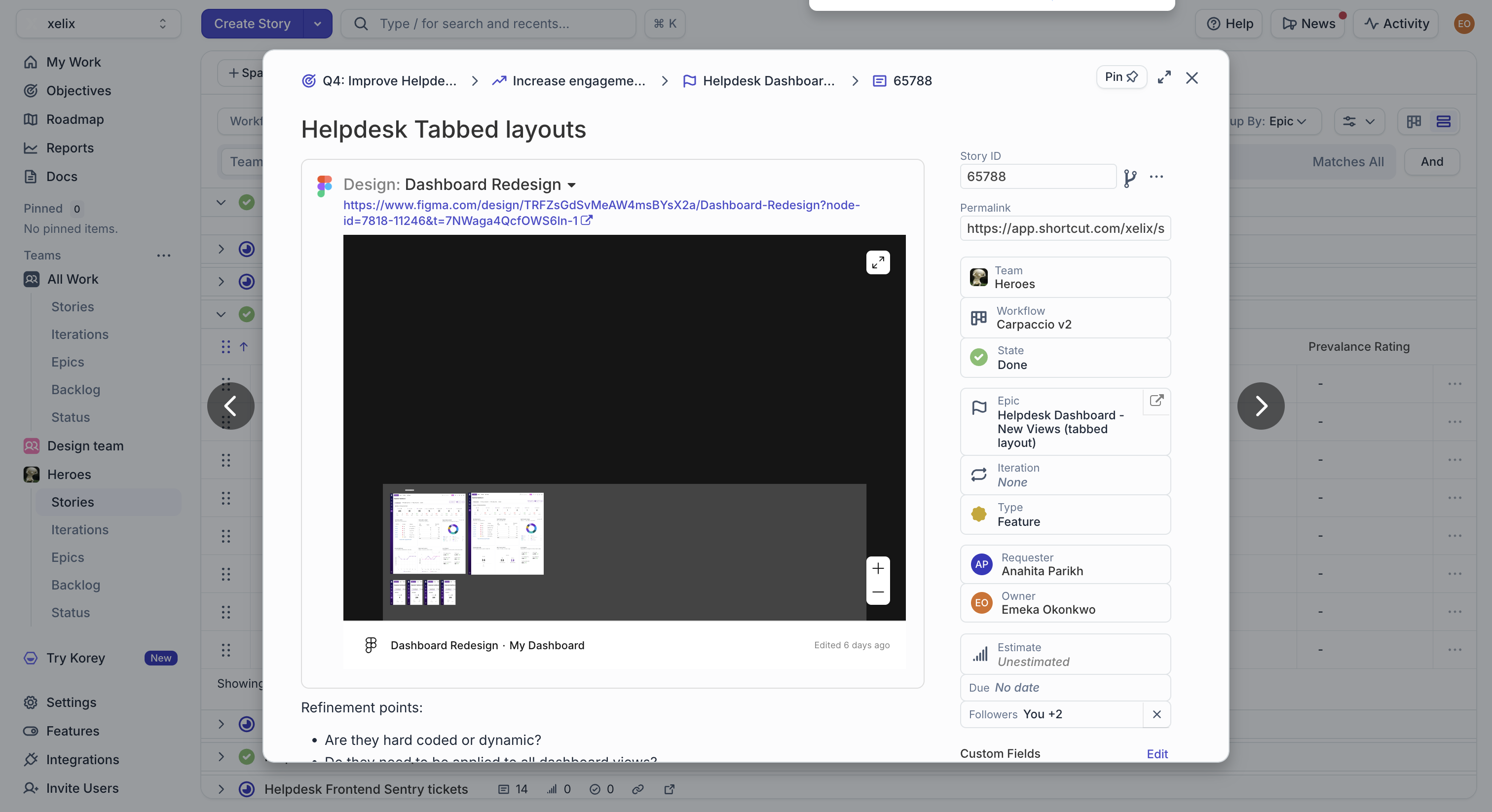
Facilitated workshops, tested concepts with customers, ran design reviews and supported implementation through design QA throughout Agile delivery, establishing reusable patterns for ticket states, contextual data panels, filters and assignments across Figma and Storybook.
Inside the Build
A closer look at how Helpdesk came together — from the tangle of email, ERP and platform work behind a single vendor query to a connected operational layer that pairs AI with trusted financial data.